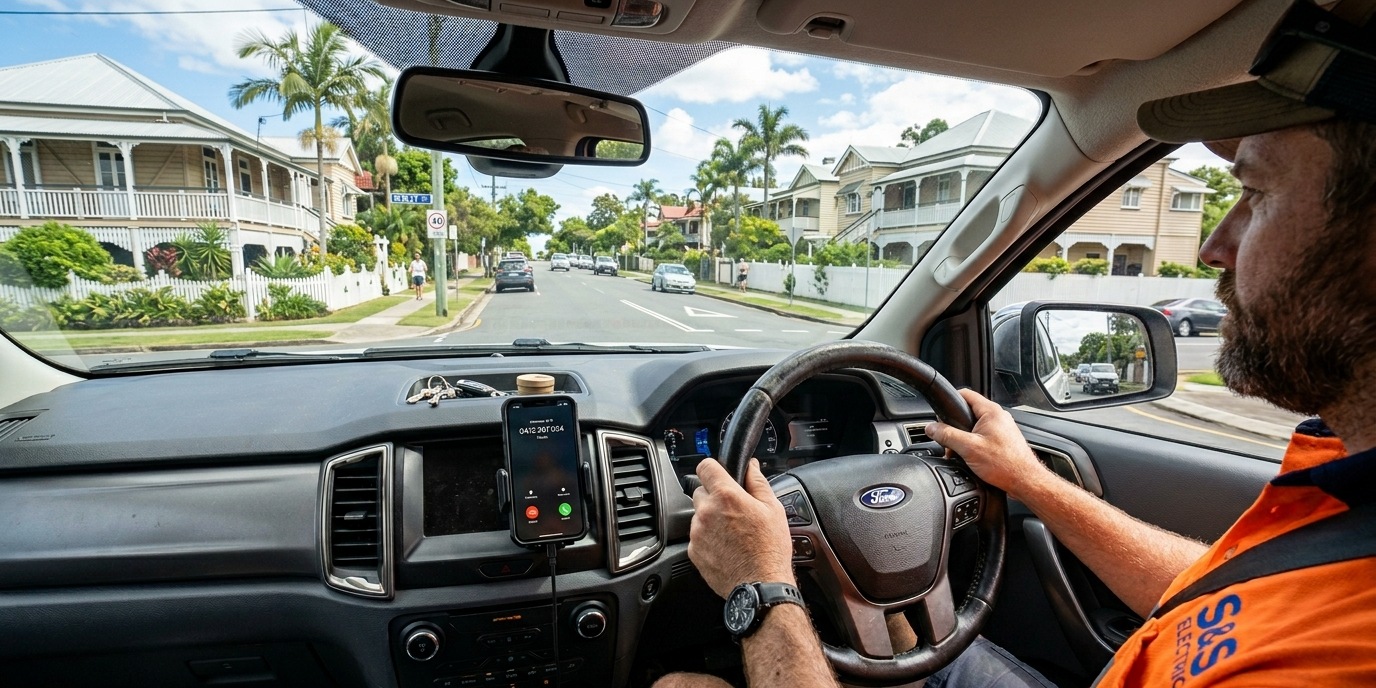
Australian law prohibits using a handheld mobile while driving — a $400+ fine and 4 demerit points in most states. Tradies who drive between jobs and answer calls while driving are breaking the law and risking their licence. A phone answering service captures calls while driving so the tradie calls back safely when stopped.
The morning run between jobs is when tradespeople are most likely to receive enquiry calls — 7:30am to 9am is the peak inbound call window for trade services, because customers are heading to work and making calls before the day starts. This is also exactly when tradies are driving between their home, the first job, and the hardware store. The result: peak call volume arrives when the tradie is legally prohibited from answering.
Roadside enforcement of mobile phone laws has intensified in Australia. All states have introduced camera-based detection, and fines of $400–$570 plus 4 demerit points are standard across NSW, Victoria, and Queensland. For a tradie operating on a commercial licence or in a safety-critical industry (crane operator, elevated work platform), accumulated demerit points create a licence risk that threatens the entire business.
How Does Driving Time Affect Tradie Phone Answer Rates?
Industry data on tradie call patterns shows that 35–45% of inbound calls arrive during driving windows — morning transit (7:30–9am), lunchtime (12–1pm), and end-of-day transit (4–6pm). These windows represent the times when customers are most likely to call AND when tradies are least able to legally answer. Without overflow answering, nearly half of all inbound enquiries are effectively unreachable by design.
Bluetooth hands-free systems allow legal call acceptance while driving, but taking customer enquiry calls while navigating traffic creates a different problem — the tradie is distracted, can't access their calendar, can't accurately quote, and is having a professional customer conversation while concentrating on driving. The quality of these calls is poor, and poor call quality loses jobs.
What's the Right Solution for Phone Coverage While Driving?
An overflow answering service that activates when the tradie doesn't answer within 4–5 rings is the cleanest solution. The tradie drives safely; the service captures every call; a message with the caller's details arrives by SMS or email when the tradie parks. The tradie makes callbacks from a parked position — composed, able to access their calendar, and fully focused on the conversation. Call quality and conversion rates both improve.
The system also removes the temptation to answer while driving. When a tradie knows every call is captured by the service, they don't feel the anxiety of watching a call ring out. The missed call notification is no longer a "revenue lost" signal — it's a "handled by the service" signal. This psychological shift is underestimated but consistently mentioned by tradies who implement answering services.
Is hands-free driving phone use legal for tradies in Australia?
Hands-free calls (Bluetooth, mounted phone, speakerphone with phone in a cradle) are legal in all Australian states. However, using a phone held in the hand — even at a red light — is illegal in all states and territories. Mounted GPS navigation that happens to also display a call is generally permitted; interacting with the touchscreen while moving is not. Check your state's specific wording if unsure.
How much can a tradie be fined for using a phone while driving?
NSW: $362 fine, 5 demerit points; Victoria: $573 fine, 4 demerit points; Queensland: $1,161 fine, 4 demerit points; WA: $1,000 fine, 3 demerit points; SA: $600 fine, 3 demerit points. Learner and provisional drivers face doubled penalties in most states. Commercial vehicle operators may face additional penalties under heavy vehicle regulations.
Does having an answering service mean the tradie misses the call entirely?
No — the tradie's phone rings first. Only if unanswered does the call route to the answering service. When the tradie is available and parked, they answer directly. When driving, the service captures the call. The tradie sees a message notification when parked and returns the call from a position where they can give full attention to the customer conversation.
Stop risking your licence and losing jobs — CallSorted captures calls while you drive →