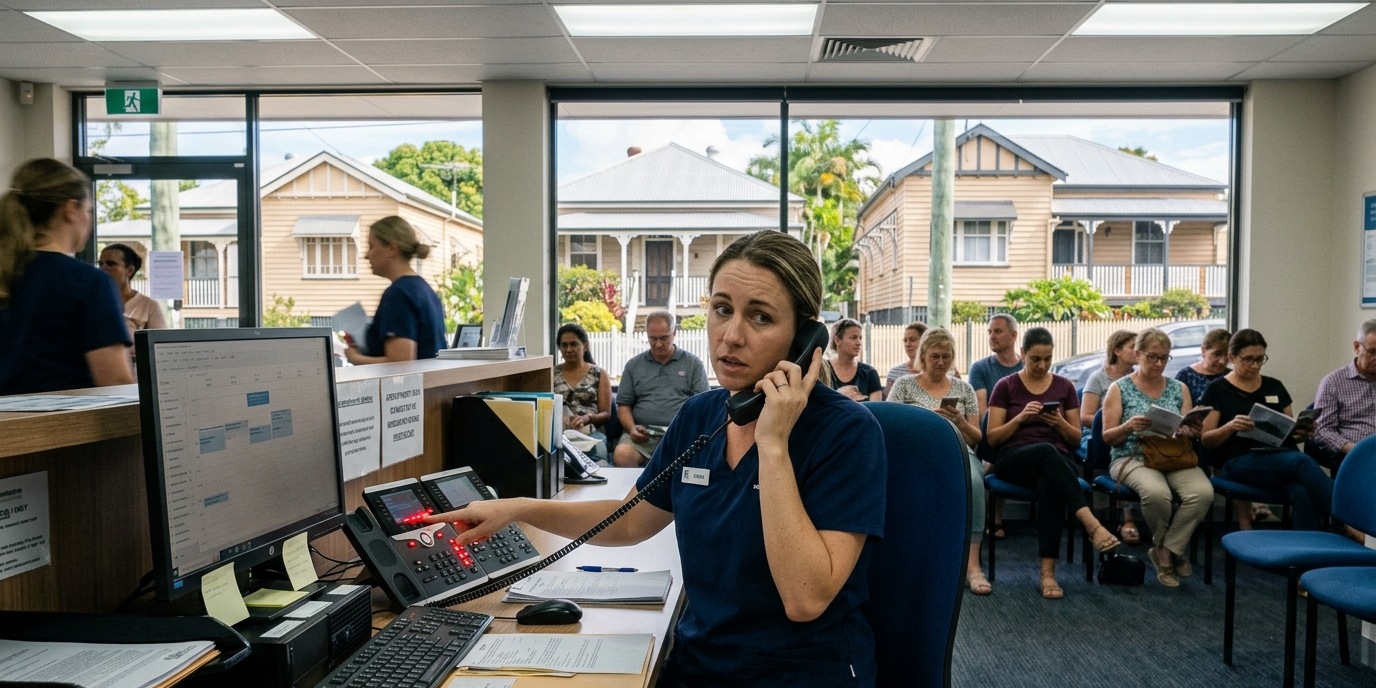
The average Australian medical centre has a no-show rate of 12–18%. Phone confirmation calls reduce no-shows by 40–55% — but most clinics don't have the capacity to make confirmation calls manually. AI outbound calling for appointment confirmation reduces no-show rates to 6–8% while freeing reception staff from confirmation call duty. Each recovered no-show appointment is worth $45–$280 depending on appointment type.
Every no-show is a double loss: the lost revenue from the empty slot and the cost of a patient who didn't receive care. At 15% no-show rate in a busy GP practice seeing 80 patients per day, that's 12 empty slots daily. At $65 average consult value, that's $780 lost every single working day — or $195,000 per year.
The data on confirmation calls is clear: they work. A phone call the day before an appointment reduces no-shows by 40–55%. The problem is the time required to make those calls manually.
Why manual confirmation calls don't happen consistently
Medical reception teams know confirmation calls reduce no-shows. They do them when they have time. But the 9am rush, the constant inbound queue, and the in-clinic demands mean confirmation calls happen sporadically — if at all. In a 90-patient-per-day clinic, making 90 confirmation calls the previous day requires approximately 3 hours of reception time. That time rarely exists.
AI outbound confirmation: every patient, every time
AI outbound confirmation calls happen automatically the evening before or morning of each appointment — without reception staff involvement. The AI calls each patient, confirms their appointment, offers to reschedule if needed, and notes the outcome. Patients who cancel are immediately removed from tomorrow's schedule; those with confirmed appointments are noted. Cancellation slots are instantly offered to the waitlist.
The result: your 15% no-show rate drops to 6–8%. Your waitlist fills cancelled slots. Your revenue per opening day increases materially.
Frequently asked questions
What's the optimal timing for AI confirmation calls — how many hours before the appointment?
Research on medical appointment confirmation timing shows the optimal window is 18–36 hours before the appointment. This gives patients enough notice to cancel and reschedule if needed, while keeping the appointment top-of-mind. Calls more than 48 hours in advance see higher confirmation rates but lower actual attendance (patients confirm and then forget). Calls on the morning of the appointment are less effective for rescheduling purposes. CallSorted defaults to 20 hours prior, which is configurable.
How does AI handle patients who need to reschedule during the confirmation call?
Patients who indicate they can't make their appointment are immediately offered available reschedule slots during the confirmation call. The AI presents 2–3 options and books the new appointment on the spot, cancels the original slot, and sends a new confirmation SMS. This automation means rescheduled patients don't fall through the cracks (a common problem with manual confirmation callbacks) and cancelled slots are immediately made available to the waitlist.
Is there a concern about patient fatigue from AI confirmation calls?
Patient acceptance of confirmation calls — including AI confirmation calls — is high because the purpose is clearly helpful. However, practices should configure contact preferences: patients who prefer SMS confirmation over voice calls should have this noted in their file and respected. CallSorted checks for communication preferences before initiating voice calls, and defaults to SMS for patients with a noted preference or failed voice delivery.
Cut your no-show rate in half. Book a demo to see the confirmation workflow in action.