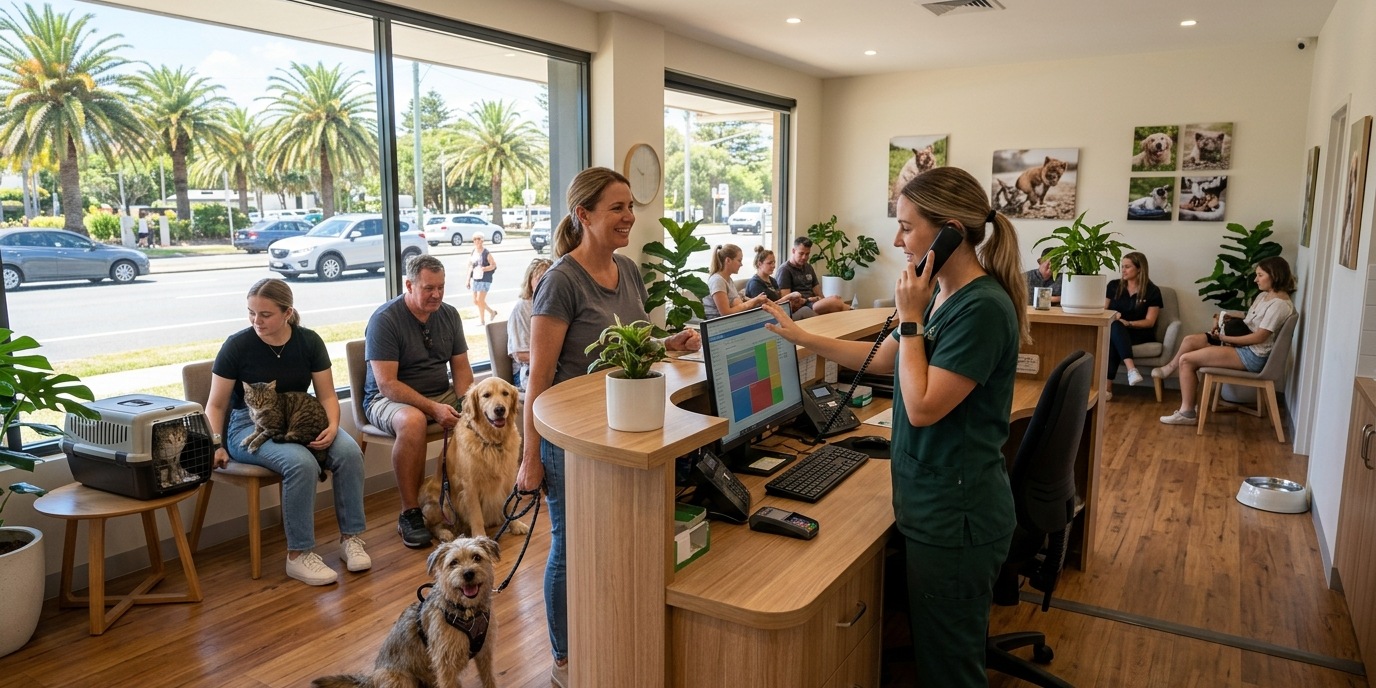
Veterinary clinics face phone overwhelm due to the combination of high call volume, emotionally charged callers (pet owners in distress), complex triage requirements, and limited front-desk staff. A veterinary phone answering service handles routine bookings and enquiries, freeing clinic staff for clinical support and in-clinic patient care.
A busy small animal veterinary clinic in metropolitan Australia processes 40–80 appointments per day and receives 80–150 phone calls. The calls range from routine vaccination bookings (low complexity, low urgency) to after-hours emergencies where a pet is in distress (high complexity, high urgency, requires immediate veterinary assessment). Managing this range from a single front-desk position, while also checking in patients, processing payments, and supporting clinical staff, creates a structural phone overwhelm problem.
The veterinary industry's phone challenge is compounded by caller emotion. Pet owners calling about a sick or injured animal are often anxious or distressed. These calls take longer, require more careful handling, and demand a level of empathy and reassurance that routine booking calls don't. A front-desk staff member simultaneously managing walk-in patients and distressed phone callers cannot provide full quality on either front.
What Are the Most Common Veterinary Phone Call Types?
Booking calls (new and existing patients, routine and urgent) account for about 45% of veterinary phone volume. Medication and prescription enquiries — "can we get another prescription for [pet]?" — account for around 20%. Results enquiries (post-procedure, pathology results) account for 15%. After-hours triage (is this an emergency?) accounts for 10%. General enquiries (pricing, services, vaccination schedules) account for 10%.
The booking and general enquiry categories — 55% of volume — can be handled by a trained answering service with access to the clinic's booking system. Medication and results enquiries require clinical staff involvement for the substantive response, but the intake — capturing what the call is about and committing to a callback from clinical staff — can be handled by the service. Only genuine clinical emergencies require direct and immediate clinical staff involvement.
How Do Veterinary Clinics Handle After-Hours Emergency Calls?
Veterinary after-hours call triage is the highest-stakes component of veterinary phone management. Owners calling after hours with a sick or injured pet need immediate guidance: is this a genuine emergency requiring the 24-hour emergency hospital, or a condition that can wait until morning? Incorrect triage in either direction has consequences — under-triaging an emergency delays critical care; over-triaging routine conditions creates unnecessary emergency hospital costs for owners.
After-hours veterinary answering services use AVMA and RSPCA-endorsed triage protocols to assess caller-described symptoms and provide appropriate guidance. Symptoms that warrant immediate emergency hospital referral (breathing difficulty, suspected poisoning, seizures, traumatic injury) are escalated immediately with the nearest 24-hour emergency hospital contact. Non-emergency presentations are triaged for next-morning booking.
Can a phone answering service handle veterinary booking calls without clinical training?
Yes, for routine booking calls. The agent needs to know the clinic's services, appointment types (consultation, vaccination, surgery), and scheduling availability. They do not need veterinary clinical knowledge for routine bookings. For triage calls — "is this an emergency?" — veterinary-specific triage training or a protocol document is required, and the service should be able to identify when to escalate to clinical staff.
How does phone overwhelm affect veterinary staff retention?
Significantly. Front-of-house staff in veterinary clinics cite phone overwhelm and emotionally demanding caller management as primary contributors to burnout. Practices that implement phone answering support report measurably lower staff turnover in reception roles — staff feel able to manage their workload and provide quality in-clinic care without the constant interruption of an overwhelming phone queue.
What's the cost of missed calls to a veterinary practice?
A missed booking call for a standard consultation ($85–$120) is a minor loss. A missed call from a new patient enquiry — who then registers with a competitor clinic — is a long-term relationship loss worth $800–$2,500 over the patient's life. Veterinary practices that track new patient registration source data consistently find that phone accessibility improvement is among the highest-ROI growth levers available.
Give your front desk breathing room — CallSorted handles veterinary call overflow →