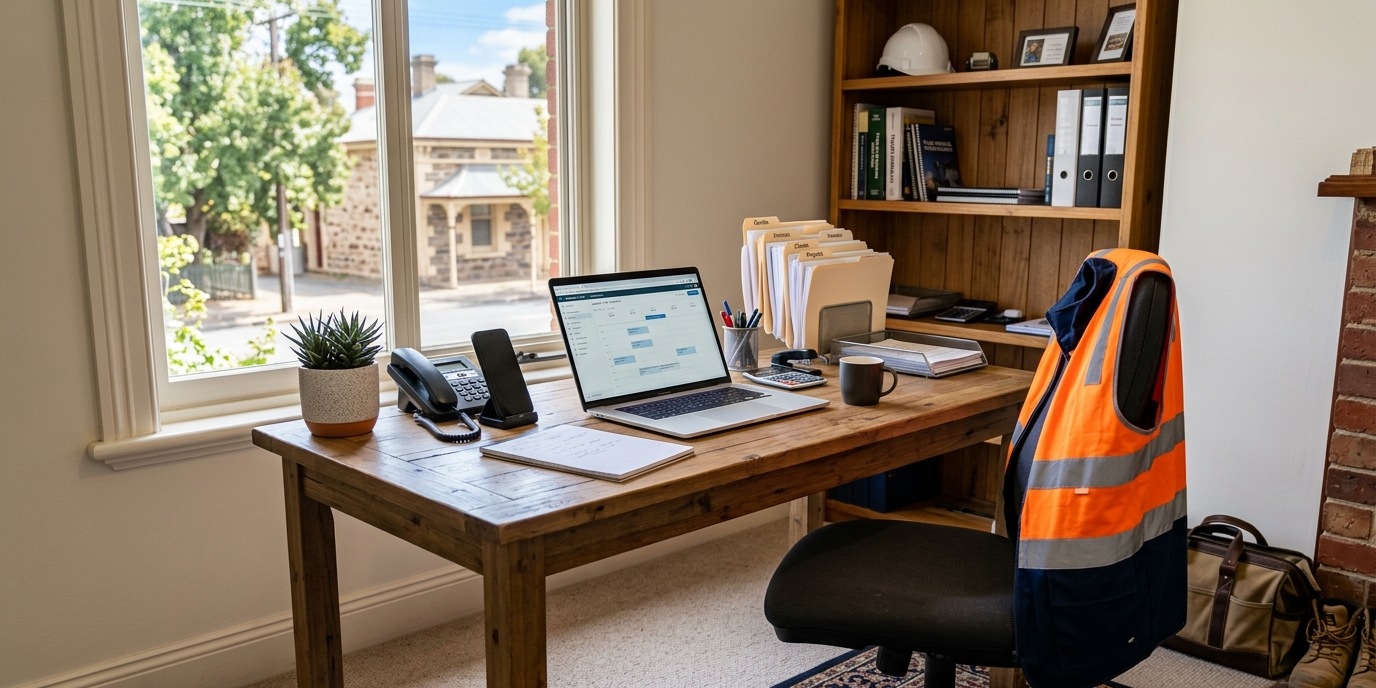
A complete 2026 phone system for a trade business requires: a cloud-based business number (not a personal mobile), an overflow answering service, after-hours call handling, voicemail-to-email or SMS transcription, and call tracking integration with your job management software. Together, these ensure no lead is missed and every call is logged.
Most trade businesses in 2026 are still running their phone system from the owner's personal mobile. This creates four problems: no separation between work and personal calls, no call recording or logging capability, no professional overflow when the phone can't be answered, and no data on how many calls are missed. These gaps are individually manageable; together, they represent a significant operational and revenue risk.
A modern trade business phone system doesn't require complex infrastructure or large investment. The components are well-established, affordable, and can be set up in a day. The ROI is immediate — the first job captured by an answering service that previously would have gone to voicemail typically more than covers the first month's cost.
What Does a Complete Trade Business Phone System Look Like in 2026?
Layer 1: Business number. A dedicated business number (03, 02, 07 landline or 1300 number) that presents professionally and routes to your mobile when you're available. Cloud phone providers (Vonage, RingCentral, Telstra Business, MegaPath) provide this for $15–$40 per month. Never give customers your personal mobile as the primary contact number.
Layer 2: Overflow answering. When you can't answer the business number, calls route to your answering service — not voicemail. The service answers in your business name, captures the enquiry, and sends you a message. Answer rate target: 95%+.
Layer 3: After-hours handling. Outside business hours, calls route to an after-hours script with appropriate expectations — either "leave a message and we'll call tomorrow" with a genuine callback, or a 24/7 service for emergency-eligible trades (plumbing, electrical, HVAC).
Layer 4: Call tracking and integration. Call data flows into your job management software (ServiceM8, Tradify, simPRO) — who called, when, what they enquired about. This creates a complete lead-to-job audit trail and allows you to track conversion rates, identify which marketing channels drive calls, and manage your pipeline.
What Common Phone System Mistakes Do Trade Businesses Make?
The most common mistakes: using a personal mobile as the primary business number (no separation, no professional appearance), relying on voicemail as the backup to missed calls (60–70% of callers don't leave messages), not tracking which calls convert to bookings (no visibility on ROI), and not having an after-hours protocol for emergency trades (missing the highest-value calls).
Secondary mistakes: auto-attendant menus that frustrate callers ("press 1 for quotes, press 2 for bookings..."), excessive hold music without a callback option, and inconsistent answer scripts that create inconsistent first impressions. Professional phone systems are not about complexity — they're about consistency.
Do trade businesses need a 1300 number?
A 1300 number is useful for multi-location businesses or businesses wanting to project national presence. For single-location trade businesses, a local area code number (02, 03, 07) is typically more trusted by local customers — it signals local service and local accountability. 1300 numbers are also more expensive and may trigger "this is a call centre" associations for trade services.
What job management software integrates best with phone systems?
ServiceM8 and Tradify both have native call integration features that log calls and link them to job records. Jobber has CRM features that capture call notes against customer profiles. The integration capability is worth considering when choosing between job management platforms — a system that automatically logs call activity saves significant manual admin time.
How long does it take to set up a complete trade phone system?
A business number can be provisioned in minutes; an answering service can be onboarded and live within 24–48 hours. Integration with job management software takes 1–2 hours of configuration. The total setup time for a complete system is typically 2–3 business days from decision to live operation. The ROI begins immediately.
Build your complete 2026 phone system — CallSorted is the answering layer →