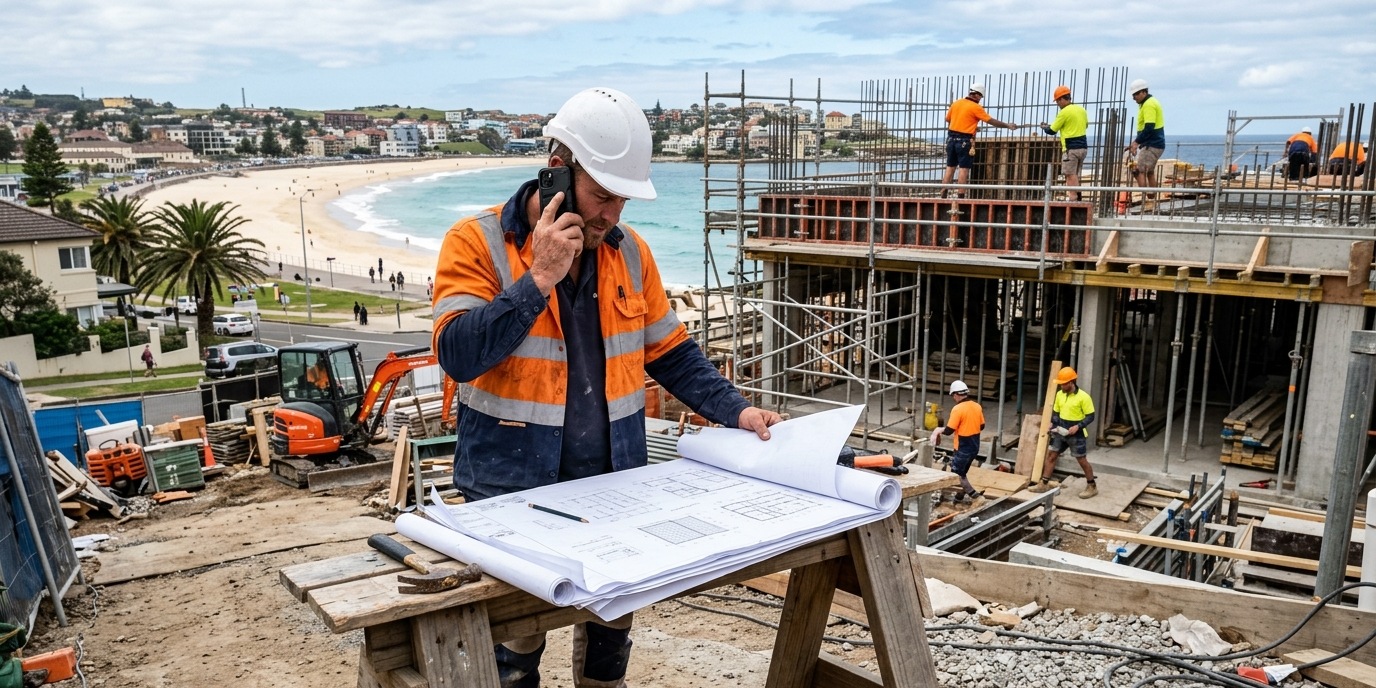
The bathroom renovation boom has created sustained high demand for tilers across Australia — quality tilers are booked 6–10 weeks out in major cities. Enquiry calls are constant, and tilers who can capture them professionally and convert to quotes stand to earn significantly more than those who miss calls while on the tools.
Australian spending on bathroom renovations reached $3.6 billion in 2024, driven by ageing housing stock, changing lifestyle preferences, and a preference for home improvement over relocation during high property price environments. Tilers are in high demand, and experienced tilers in Sydney, Melbourne, and Brisbane operate in a market where their primary constraint is not finding customers — it's managing enquiry volume while delivering quality work.
The tiler's phone problem is structural: quality work requires full attention. Cutting precision lines in porcelain, laying floor tiles to level, applying grout — none of these tasks tolerate interruption. A tiler working in a bathroom receiving 5–8 enquiry calls per day cannot answer them without compromising the job quality that earns the premium rates justifying the business. The missed calls don't represent a marketing failure; they represent a phone management gap.
How Do Tilers Lose Renovation Jobs to Competitors?
The mechanism is straightforward: a homeowner planning a bathroom renovation calls 3–5 tilers from a Google search or tradie platform recommendation. They call in order of review quality and distance. Tilers who answer (or have a service answering for them) get the quote request; tilers who don't get skipped. Since the homeowner is calling 5 tilers and only needs one, the miss rate for a non-answering tiler is close to 100% for any given lead.
The financial impact is significant. A full bathroom retile at $80–$120 per square metre, on a standard 8m² bathroom, represents a $640–$960 job. A full bathroom renovation including floor, wall tiling, waterproofing, and feature tiles is typically $3,500–$6,000 for the tiling component. Missing 3 renovation enquiry calls per week costs $500,000+ annually at the higher end.
What Should a Tiler's Phone Answering Script Capture?
An effective tiler answering script captures: type of job (new bathroom, retile existing, repair, commercial), approximate scope (how many rooms, square metres if known), location, preferred start timeframe, and whether the customer has a budget range in mind. This information allows the tiler to triage quote requests by job value and schedule site visits in an efficient geographic route, rather than returning calls blindly and discovering the job is too small or too far after driving there.
The script should also confirm that the tiler will call back within a defined window — "I'll have our tiler call you between 5–6pm today to discuss your project" — rather than an open-ended "we'll call back soon." Setting a specific callback window reduces the chance that the customer books another tiler before the callback occurs.
Should tilers quote over the phone or always do a site visit?
Standard bathroom retiling in a known property type (standard 3-bedroom house, standard bathroom dimensions) can be rough-quoted over the phone with a range. "Based on what you've described, a full retile of that size is typically $2,800–$3,800 depending on tile selection and condition of the existing surface — we'd confirm the exact quote on site." This approach qualifies the customer and sets expectations before committing to a visit.
How do tilers manage a full bookings calendar while still taking enquiry calls?
Taking the call and capturing the enquiry is worthwhile even when fully booked. Tilers booked 6–8 weeks out can offer a waitlist position, with the customer committed to a start date. Waitlist customers are high-quality leads — they've committed to the tradesperson, not just the price. A managed enquiry list converts at higher rates than cold leads when a slot opens.
What's the best way for a sole-operator tiler to handle high enquiry volume?
An overflow answering service handles calls during work hours, capturing enquiry details and setting callback expectations. The tiler reviews the day's captured enquiries at end of day and returns calls in priority order — largest jobs first. This converts the phone from an interruption into a structured opportunity pipeline that doesn't disrupt the work that earns the revenue.
Capture every bathroom reno enquiry — CallSorted answers while you tile →