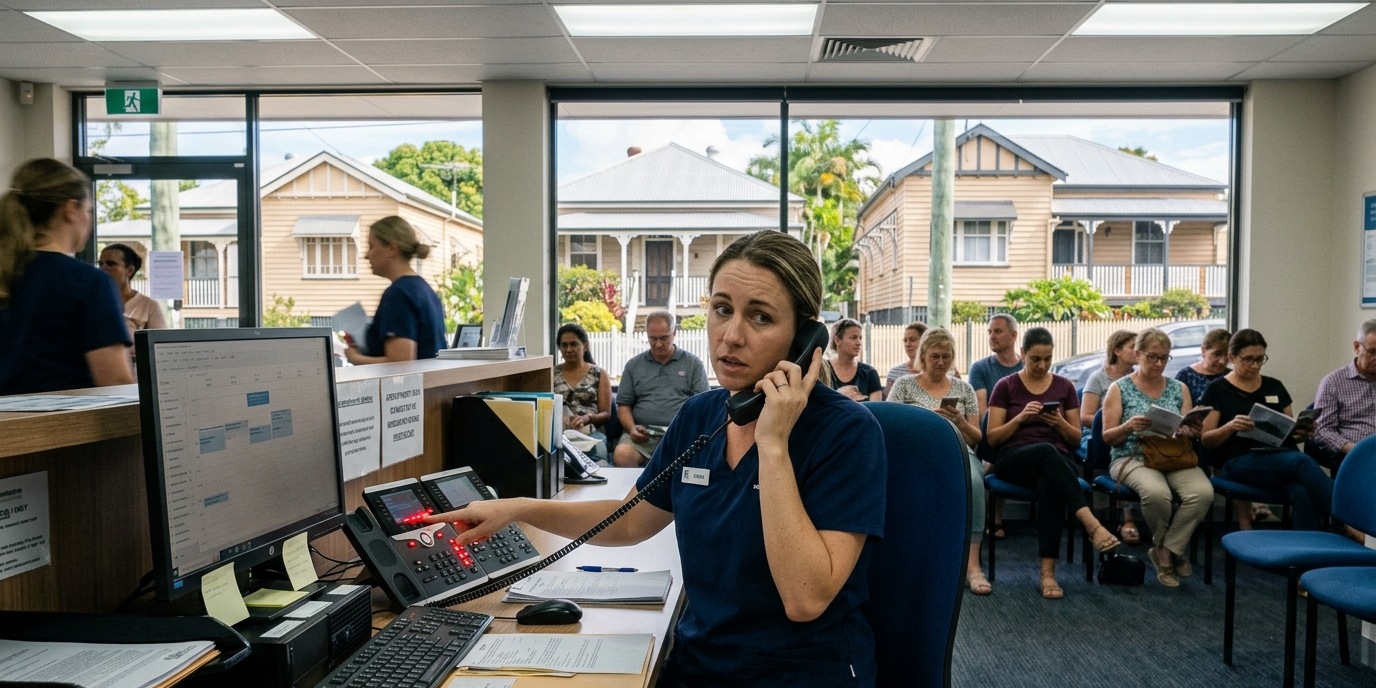
Specialist medical practices create referral bottlenecks when GP coordinators can't reach booking staff — leading to referrals being diverted to other specialists. A phone answering service with medical booking training ensures every GP referral call is answered promptly, maintaining the referral relationship and patient throughput.
Specialist medical practices — cardiology, orthopaedics, endocrinology, dermatology, neurology — depend on GP referrals for the majority of their patient flow. This creates a specific phone dynamic: the primary callers are GP practice coordinators, not patients directly. A GP coordinator who calls a specialist's rooms and reaches voicemail will move to the next specialist on the referral list. Unlike a patient who may persist, a GP coordinator has multiple options and professional accountability to get the referral placed quickly.
The bottleneck is typically at the reception level. Specialist rooms with a single receptionist handling patient check-in, billing, clinical correspondence, and incoming calls simultaneously will miss GP referral calls during peak periods — particularly 8–10am and 12–2pm, when GP practices send the majority of their referral calls. These missed calls directly reduce patient flow without the specialist knowing why their schedule has lighter spots.
Why Do GP Referrals Go to Other Specialists?
The decision is simple: GP coordinators call specialists in order of responsiveness. A busy GP practice may manage referrals for 10–15 specialists across different disciplines — cardiology, dermatology, ophthalmology. When a referral needs to be placed, the coordinator calls their preferred specialist first. If that call goes to voicemail, they call the backup. Over time, the "backup" specialist — who consistently answers — becomes the preferred specialist. The first specialist loses referral volume without a clear cause-and-effect signal.
Specialist practices that implement phone answering for overflow and after-hours calls report significant improvements in referral capture. In competitive specialties with multiple practitioners in the same metropolitan market, phone accessibility is a primary differentiator — more important than location, and second only to personal GP-specialist relationships.
How Should Specialist Practices Handle GP Referral Calls?
Referral calls from GP practices should be answered within 3 rings, confirmed by a knowledgeable staff member (not a generic answering service agent), and able to provide: earliest available appointment, confirmation of the specialist's Medicare provider number, confirmation of whether the practice bulk-bills or gap charges, and any specific preparation requirements for the initial consultation. A referral call handled professionally in under 3 minutes is the standard that keeps referral relationships strong.
After-hours referral triage is also important. Urgent referrals — for patients with concerning symptoms — may come via the specialist's rooms after hours. A protocol that distinguishes urgent from routine referrals and provides an after-hours contact for urgent cases is a significant differentiator for specialists in acute specialties (cardiology, endocrinology with acute presentations).
What training do phone answering agents need for specialist medical practice calls?
Medical practice phone agents need: practice-specific knowledge (specialist name, subspecialties, consulting days and locations), Medicare billing basics (bulk-bill vs. gap billing, referral validity), and the escalation protocol for urgent clinical enquiries. CallSorted's healthcare-trained agents handle these requirements with a brief practice-specific briefing document — no lengthy onboarding required.
How do specialist practices track referral source data?
Most practice management systems (Best Practice, Medical Director, Clinic to Cloud) capture referral source at the new patient booking stage. Practices that track referral source by GP practice can identify which GP relationships are generating the most referrals — and which may be declining. Phone accessibility improvements are often visible in referral source data within 60–90 days.
Should specialist rooms offer online referral forms instead of phone-based referral booking?
Online referral forms supplement but don't replace phone booking for GP coordinators. Coordinators often need to confirm availability before committing a referral, and have clinical questions about suitability. Phone remains the primary referral channel for specialist practices — online forms handle the paperwork component but not the booking conversation.
Stop losing GP referrals to voicemail — CallSorted ensures every referral call is answered →