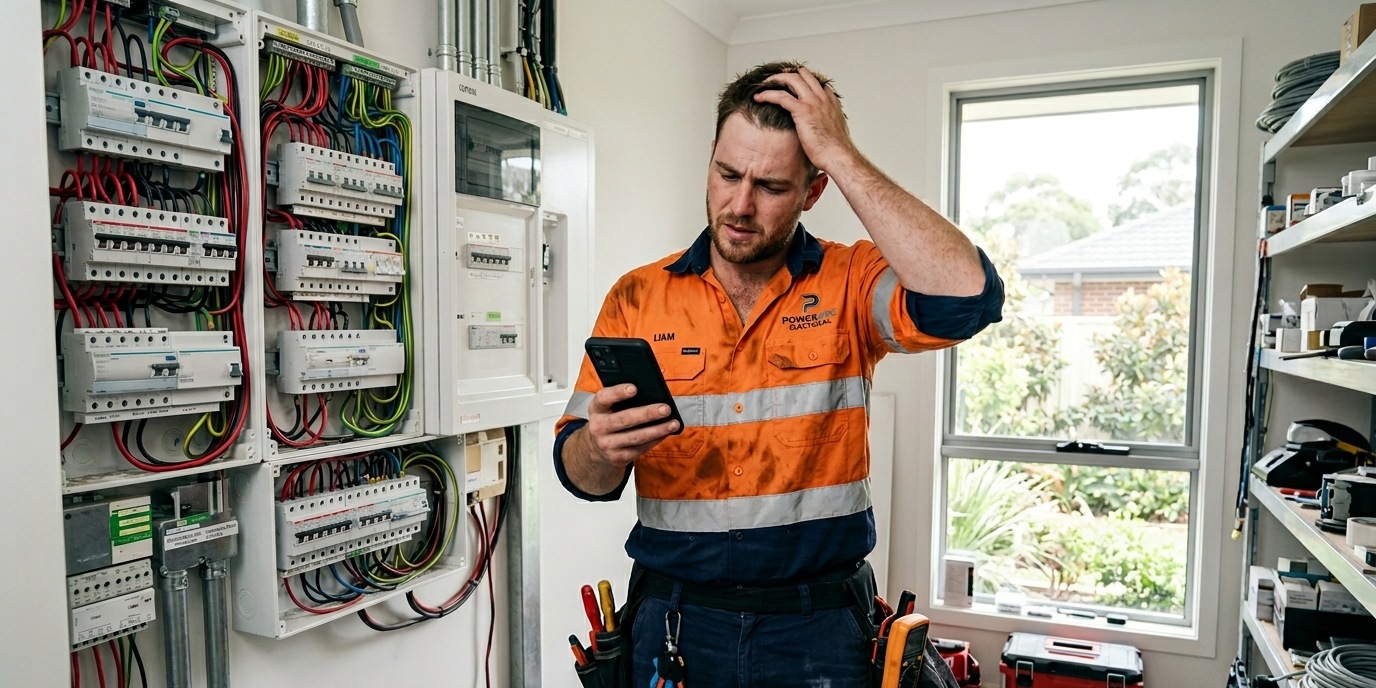
A sole-operator electrician on tools cannot answer the phone — it's unsafe and impractical. This creates a structural revenue problem: the phone rings during peak work hours (9am–3pm), calls go to voicemail, and customers move on. A phone answering service solves this without requiring the sparky to stop working or hire a receptionist.
The one-man-band sparky is one of the most common business structures in the Australian electrical industry. A licensed electrician operating as a sole trader, working 8–10 jobs per day across residential and light commercial work, generating $150,000–$280,000 in annual revenue. The business is profitable, the tradesperson is skilled, and the phone is their biggest operational problem.
Working on a live panel, on a roof, in a roof void, or in a customer's home makes answering the phone impractical and often dangerous. NFPA and Australian electrical safety standards effectively require undivided attention during most electrical work. The phone call that comes in at 10:30am while a sparky is pulling cable goes to voicemail, and the customer has moved on by noon.
How Much Revenue Does a Sole-Operator Electrician Lose to Missed Calls?
A residential electrician charging $150–$180 per hour, averaging 6 billable hours per day, generates approximately $900 in daily revenue from booked work. But if 30% of inbound enquiry calls are missed and not recovered (industry average for sole operators), and the average job value is $650, a sparky missing 5 calls per week is losing 1.5 jobs per week — approximately $975 in weekly revenue, or $50,000 annually.
The compounding effect is worse: missed calls don't just lose one job. The customer who called and got voicemail found another electrician, who now has a customer relationship. Referrals flow from that electrician for years. Sole operators who improve their call answer rate typically report 20–40% revenue growth within 6 months — not from any marketing investment, but from capturing demand that was already calling them.
What's the Best Phone Answering Solution for a One-Man Sparky?
A virtual receptionist service — where a trained agent answers calls in the sparky's business name — is the most professional and cost-effective solution. The agent captures the job enquiry details, provides realistic scheduling expectations, and sends a message to the sparky for callback at the end of the job or during lunch. The caller gets a live response and a confirmed callback; the sparky gets a qualified message instead of a missed call notification.
The service works on overflow — the sparky's own phone rings first. If unanswered within 4–5 rings, the call routes to the answering service. This means the sparky answers when they're able (between jobs, during lunch) and the service handles everything else. No calls go to voicemail; no calls go unanswered.
What should an electrician's phone answering script say?
"Thanks for calling [Business Name], this is [Agent Name]. [Name] is on a job at the moment — can I take some details and have them call you back this afternoon?" This framing is professional, accurate (the sparky is working), and sets a concrete callback expectation. It's dramatically better than voicemail because the caller knows they've been heard and can expect a call.
How does a phone answering service handle emergency electrical calls?
Emergency electrical calls — exposed wiring, sparking outlets, power outages — are triaged immediately. The answering agent identifies emergency calls through the caller's description, confirms the address, and sends an immediate SMS to the electrician marked as urgent. This escalation protocol means genuine emergencies reach the sparky instantly while routine enquiries are batched for callbacks.
Is a phone answering service worth it for a sole-operator electrician?
The economics are clear: a service costs $250–$500 per month. A single recovered job per month at $650 average value covers the cost. Most sparkies report recovering 4–8 additional jobs per month after implementing answering coverage — a 8–16x return on investment, consistently.
Stop losing jobs while you're on tools — CallSorted answers for you →