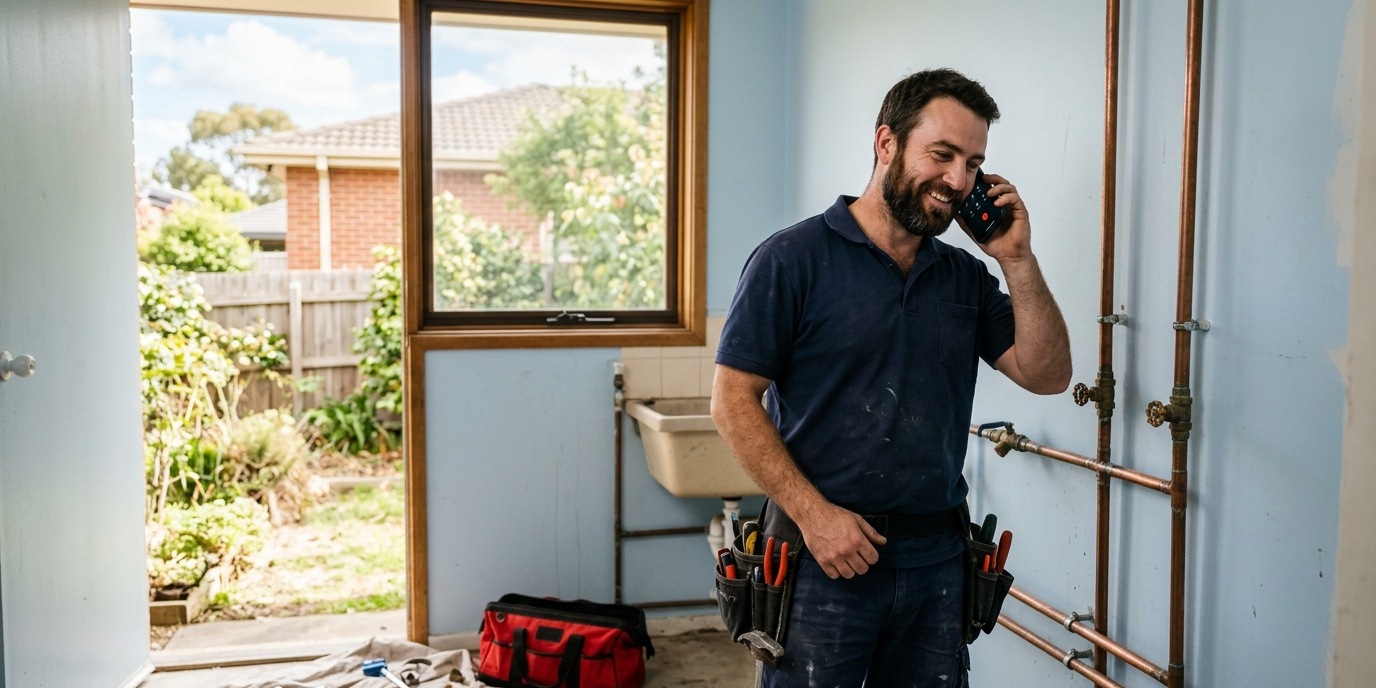
Insurance-related plumbing calls — burst pipes, flood damage, leak investigations for insurance claims — are high-value, time-sensitive jobs that require immediate response. Plumbers who answer these calls first win the work. A 24/7 phone answering service ensures no insurance emergency goes to a competitor.
When a homeowner calls their insurer about a burst pipe or water damage, the insurer typically asks the policyholder to source their own licensed plumber for emergency make-safe work, or the insurer dispatches work through a preferred supplier network. Either way, speed of response is the deciding factor. The plumber who answers first — and who can provide a clear ETA — gets the job.
Insurance plumbing work is among the most valuable a plumber can win. Jobs typically range from $800 for a simple make-safe through to $15,000+ for full leak remediation and reinstatement. A single insurance job won because a call was answered after hours represents 3–4 days of standard residential work. The economics of 24/7 phone coverage make themselves very clear in this context.
Why Do Plumbers Lose Insurance Jobs to Competitors?
The answer is almost always phone coverage. Insurance work flows to plumbers who can be reached, who can provide a credible ETA, and who can confirm their licensing status on first contact. An insurer or policyholder calling at 11pm with a burst pipe will call three plumbers in succession — the first one who answers and says "we can be there in 90 minutes" wins the job. The other two find out about it when they return the missed call in the morning.
Plumbing businesses that have invested in after-hours answering consistently report insurance and emergency work as the highest-ROI category in their revenue mix — high average job value, minimal marketing cost (the phone rang), and strong potential for follow-on reinstatement work once the make-safe is complete.
What Information Should a Plumber's Emergency Answering Script Capture?
For insurance and emergency calls, the script needs: property address, nature of the emergency (burst pipe, leak, blocked drain, hot water failure), whether water is actively flowing and whether the meter has been shut off, insurance claim number if applicable, contact name and callback number, and whether the property is occupied. This information allows the on-call plumber to assess job complexity and confirm an accurate ETA without a follow-up call.
The script should also distinguish between emergency make-safe calls (dispatch within 2 hours) and insurance assessment calls (non-urgent, schedule within 48 hours for report). Correctly triaging these two call types prevents the on-call plumber from being dispatched to a non-emergency at 2am while a genuine burst pipe waits.
How do insurance companies find plumbers for emergency work?
Insurers use a mix of preferred supplier networks and policyholder-sourced tradespeople. Preferred network membership typically requires demonstrated response time data, licensing documentation, and insurance coverage. Many plumbers build network relationships through responsiveness — insurers remember which plumbers answered at 2am and update their preferred lists accordingly.
Should plumbers advertise specifically for insurance plumbing work?
Yes, for plumbers who have the capacity for emergency response work. Search terms like "insurance plumber [suburb]", "burst pipe insurance claim", and "after-hours plumber" attract high-intent callers. But advertising is wasted if the phone isn't answered — the conversion rate on these high-intent searches is entirely dependent on phone responsiveness.
What's the risk of not answering after-hours emergency plumbing calls?
Beyond the direct revenue loss, there's a reputational cost. Policyholders who can't reach a plumber will leave negative reviews mentioning "called at midnight, no answer." These reviews specifically hurt search ranking for emergency plumbing terms — the exact queries that drive the most valuable inbound calls.
Never miss an insurance job again — talk to CallSorted about 24/7 plumbing answering →