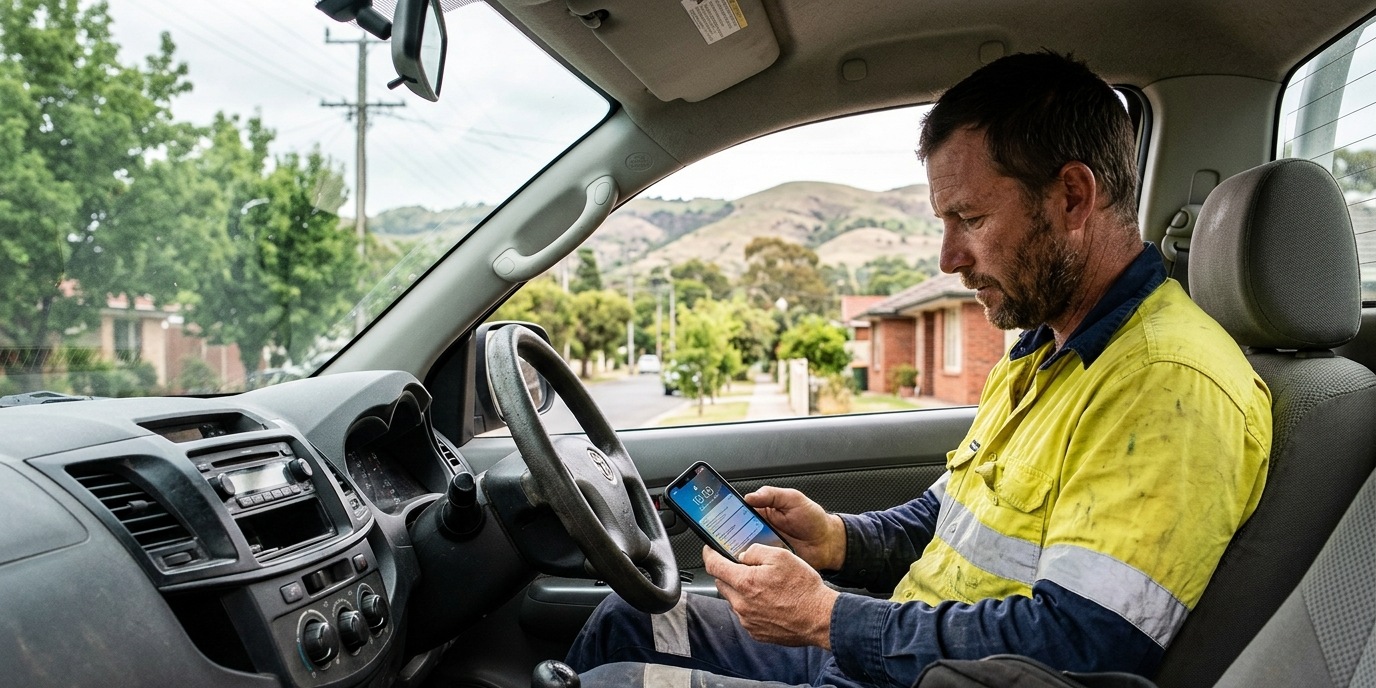
Missed call text-back (auto-SMS when a call goes unanswered) recovers 22–34% of missed leads in Australian service businesses. It's significantly better than voicemail (8% recovery) but substantially worse than answering (78% same-call conversion). Text-back works best as a safety net, not a strategy — it recovers some leads that AI answering would have converted immediately. Combined, AI answering + text-back captures 94%+ of inbound leads.
Missed call text-back is a smart automation — but it's often presented as an alternative to answering calls rather than a supplement. This distinction matters for how you deploy it and what ROI you can expect.
What missed call text-back actually does
When a call rings out or goes to voicemail, an auto-SMS fires within 30–60 seconds to the caller's mobile. The message typically says something like: "Hi, you called [Business Name] and we missed you. Reply to this message or call us back at [number] and we'll get you sorted."
The text arrives while the caller is still in "decision mode" — they haven't fully committed to calling a competitor yet. A useful, friendly text re-engages them and opens a text conversation that can convert to a booking.
Where text-back works well
Text-back works best for: trades businesses where the owner is on-site and genuinely can't answer (a plumber under a sink can reply to texts during breaks), businesses with predictable call patterns where callback can happen within 30 minutes, and as a backup layer when AI call handling is the primary channel but rare overflow occurs.
It works less well for: urgent emergency calls (where the caller needs an immediate response, not a text), high-value complex enquiries (where text doesn't convey the right impression), and businesses where a significant portion of callers are elderly or prefer voice communication.
Frequently asked questions
Should I use missed call text-back AND AI answering, or choose one?
Use both. They serve different scenarios. AI answering handles calls in real time — immediate response, immediate conversion. Text-back handles edge cases where the AI couldn't answer (rare system issues, calls that disconnect before AI picks up). Together, they create a near-zero missed lead scenario. CallSorted includes both as part of the standard configuration — AI answers all calls by default, with automatic text-back for any call that doesn't connect.
What should the text-back message say?
Effective text-back messages are: short (under 30 words), personal (use the business name), action-oriented (give them a simple next step), and warm. "Hi, [Business Name] missed your call. We'd love to help — reply here or call us back on [number] and we'll sort you out." Including "we'd love to help" or equivalent signals genuine interest rather than automated response.
Is there a Do Not Call Register or privacy consideration for text-back?
Sending a text-back to someone who called you is responding to inbound contact — this is generally permissible under Australian Spam Act and Do Not Call legislation as a response to a caller-initiated contact rather than unsolicited marketing. However, subsequent marketing texts to the same number require consent. CallSorted's text-back is configured as a single response message, not a marketing sequence, which keeps it within compliance boundaries.
The best strategy: answer every call with AI, text-back as a safety net. Set up both with CallSorted.