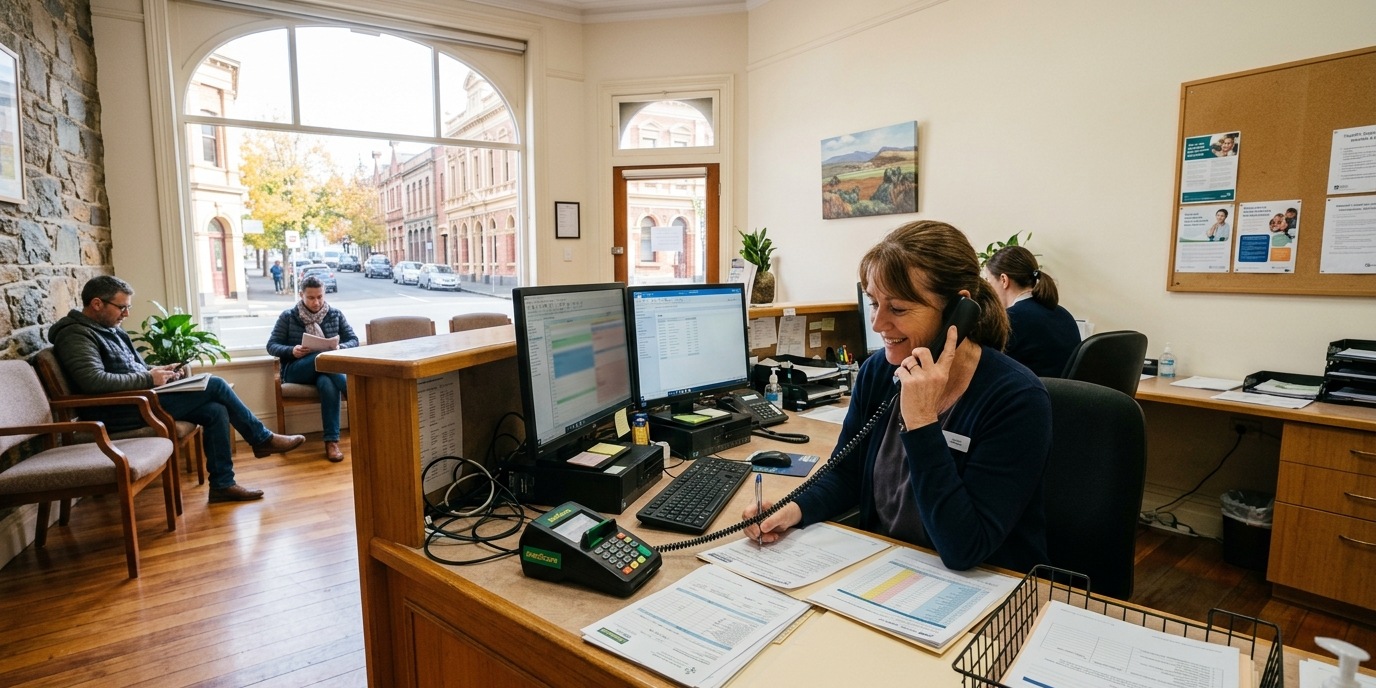
The average Australian GP clinic spends $65,000–$95,000 per year on phone reception staffing (1–1.5 FTE dedicated to phones). AI call handling for GP clinics reduces this to $4,800–$9,600 per year while improving answer rates from 72% to 97%+ and reducing average hold times from 4 minutes to under 30 seconds. Most practices save $55,000–$85,000 annually while simultaneously improving patient experience.
Medical reception is one of the most expensive administrative functions in a GP clinic — and also one of the least efficient. The problem isn't the staff; it's the nature of the work. Phone calls in a GP clinic are highly variable in length, highly concentrated in certain periods, and require significant multitasking. A human receptionist handling phones is also checking in patients, processing payments, and managing the appointment book simultaneously.
Something has to give. Usually it's the phone.
Where the $65K is going
GP clinic phone staffing costs are driven by:
- Base salary for 1–1.5 FTE medical receptionist roles: $52,000–$62,000
- Superannuation and entitlements: $8,000–$12,000
- Cover for lunch breaks, sick leave, annual leave: typically requires additional casual staff at $25–$35/hr
- Training and turnover: medical reception turnover averages 28% annually, costing $3,500–$6,000 per replacement
Total annual cost: $65,000–$95,000 for a clinic with 4–6 practitioners, handling 80–150 calls per day.
What AI handles that your phone staff currently does
AI handles approximately 78% of GP clinic inbound call tasks without human involvement: appointment booking, prescription refill requests, test result inquiries (where pre-approved protocols allow), referral confirmations, after-hours guidance, and FAQ responses. The remaining 22% — clinical questions, urgent concerns, complex scheduling — still route to clinical staff.
This means your reception team spends their time on the 22% that genuinely needs human judgment, rather than the 78% that doesn't.
Frequently asked questions
Do GP patients resist talking to AI about their health?
Patients are comfortable with AI for administrative tasks — booking appointments, requesting referrals, getting test result notifications. They're less comfortable with AI for clinical conversations — describing symptoms, asking about medications, discussing sensitive health concerns. CallSorted's GP configuration distinguishes clearly: admin tasks are handled by AI; any clinical language triggers an immediate offer to speak with a nurse or book an urgent appointment. This boundary is maintained rigorously and patients experience it as appropriate rather than dismissive.
How does AI handle after-hours calls for a GP clinic?
After-hours GP clinic call handling provides: triage for genuine medical emergencies (with redirection to 000 or the nearest hospital ED), after-hours clinic referrals for urgent-but-not-emergency situations, appointment booking for the next available session, and a recorded advice message from the practice. This is configured with input from your GPs and practice manager to ensure clinical appropriateness. It replaces the generic "we're closed, please call back" with a useful, patient-centred response.
What are the Medicare compliance implications of AI handling calls in a GP practice?
AI call handling for administrative functions (scheduling, referrals, recalls) has no specific Medicare compliance implications — these are administrative, not clinical, activities. The Practice Incentive Program and Quality Improvement Program assess clinical outcomes and patient experience, not the technology used for appointment booking. Ensure your privacy policy is updated to disclose AI call handling, and that your data processing agreement with CallSorted covers Australian Privacy Principles compliance.
Save $57,000 while improving patient experience. Book a GP clinic demo with our healthcare team.