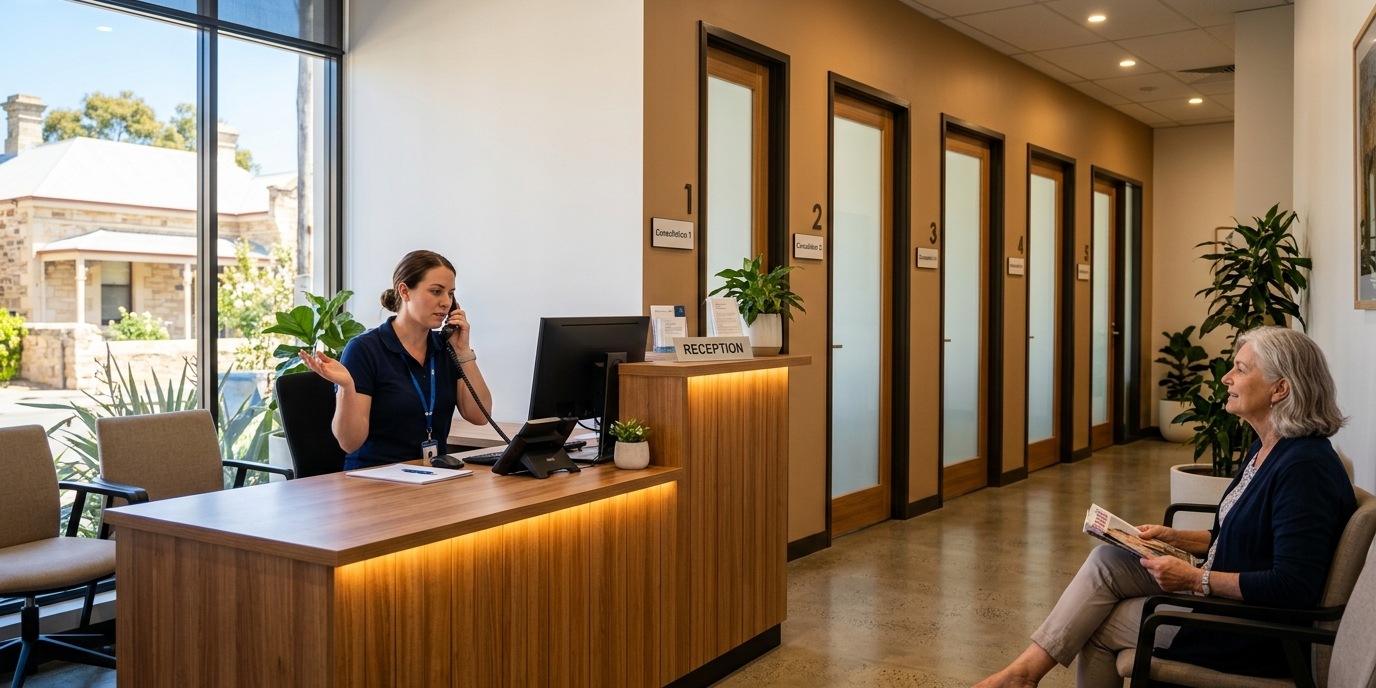
A group allied health practice with 5 practitioners and 1 receptionist typically has a call-to-answer ratio of 61% — meaning 39% of inbound calls are missed, go to voicemail, or result in a hold time of 4+ minutes. Each missed allied health appointment enquiry is worth $90–$280 depending on discipline.
Five practitioners. One phone line. One receptionist. Monday morning.
A physio patient calls about a follow-up. A GP referral comes in for the OT. A new enquiry wants to know if you bulk-bill speech therapy. The receptionist is already on the phone booking in tomorrow's psych appointments. And the phone just rings and rings.
The maths on a 5-practitioner practice
At a typical allied health group practice, each practitioner generates approximately 18 bookable enquiry calls per week. That's 90 calls per week for the whole practice — or 18 calls per day. A single receptionist can handle roughly 10–12 inbound calls per day while managing front-desk duties. The other 6–8 calls either queue, go to voicemail, or ring out.
The routing problem in multi-discipline practices
Beyond volume, there's a complexity problem. Callers asking for the speech therapist need to be handled differently from a caller asking to speak to the psychologist's receptionist. A caller asking about NDIS funding for OT has different information needs than someone asking about a Medicare rebate for physio.
Most small group practices route all calls to one person who has to context-switch on every call. This is mentally taxing, error-prone, and slow — which is why average hold times blow out.
AI call routing in a multi-discipline practice
AI call handling in a group practice works by routing based on intent from the first few words of the call. "I need to book a physio appointment" goes straight to the physio scheduling flow. "I'm calling about NDIS support coordination" gets an appropriate NDIS intake response. "I need to speak to someone urgently" flags for human transfer.
Each practitioner's schedule is accessible to the AI, which means bookings happen correctly the first time — without the receptionist playing phone tag across the practice.
Frequently asked questions
How does AI handle the different Medicare and NDIS billing complexities across disciplines?
CallSorted is configured with your specific billing structures per practitioner and discipline. Callers asking about rebates are given accurate information for each service type. NDIS queries are handled with appropriate plan management questions. The AI doesn't make billing decisions — it captures the relevant information and routes accordingly, so your admin team has everything they need when they pick up the handoff.
Can the AI distinguish between existing patients and new referrals?
Yes. When configured with your PMS, the system can identify return callers by phone number and route them appropriately — directly to appointment booking for existing patients, versus a longer intake flow for new referrals. GP referral calls can trigger an automatic notification to the relevant practitioner while capturing the referral details.
What's the implementation complexity for a practice already using software like Cliniko or Halaxy?
CallSorted integrates with Cliniko, Halaxy, and most major allied health PMS platforms. Standard integration takes 1–3 business days. Your existing calendar, appointment types, and practitioner schedules are imported directly — you don't need to rebuild anything. Calls then feed directly into your existing booking system.
See how CallSorted works for group allied health practices. Book a demo — we'll show you a live walk-through with your discipline mix.