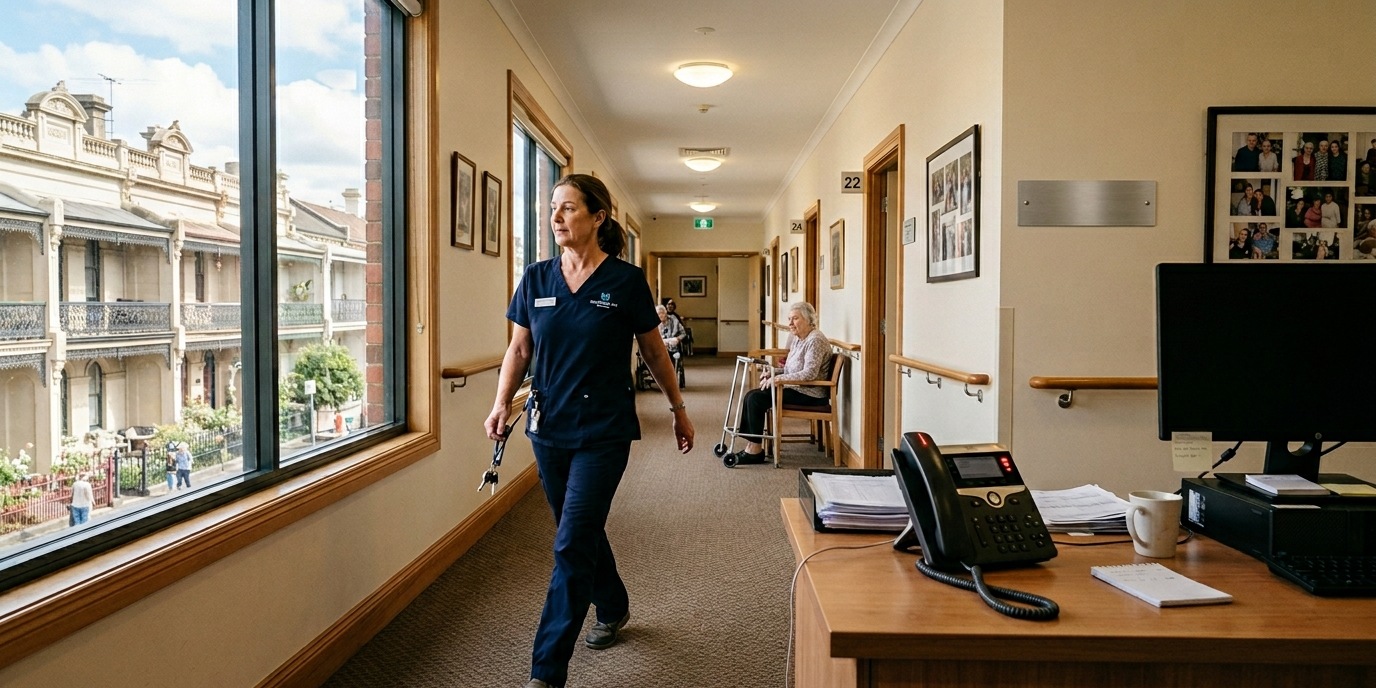
Aged care facilities in Australia receive 15–40 family update calls per day per 60 residents. These calls are time-consuming for nursing staff and often go unanswered during clinical care periods. AI-powered call handling routes family enquiries without interrupting patient care, improving family satisfaction scores by up to 34% in surveyed facilities.
Walk through any aged care facility at 10am and you'll see the same thing: nursing staff moving between residents, medication rounds in progress, and the phone ringing. Nobody wants to stop clinical care to answer a family member asking "how is Mum going today?" — but nobody wants that call to go unanswered either.
This is the aged care phone dilemma, and it's getting worse as resident-to-staff ratios tighten under the new Aged Care Standards.
Why families call so often — and why that's actually a good sign
Family engagement is a quality indicator. Facilities with higher family contact rates typically have better resident outcomes and lower complaints. The problem isn't that families call — it's that the current answering infrastructure wasn't designed for this volume.
Families call for:
- General wellness updates ("how was Mum today?")
- Medication and appointment queries
- Visit scheduling and access arrangements
- Concerns about changes in condition
- End-of-life care communication
The compliance dimension you can't ignore
Under the Aged Care Quality Standards, providers must demonstrate responsive communication with families and representatives. Calls that ring out or go to voicemail without a clear callback process create a paper trail (or lack thereof) that looks bad during an ACQSC audit.
More practically: families who can't get through escalate quickly. A call that goes unanswered becomes a complaint within 24 hours far more often than most facility managers realise.
How AI call handling works in an aged care context
An AI call system for aged care doesn't replace nurses — it filters and routes. General enquiries (visiting hours, activities schedule, who to speak to about medication queries) are handled directly. Calls that require a nurse are flagged as urgent and transferred or logged for immediate callback. The system creates an auditable record of every family interaction.
Facilities using CallSorted have reported a 40% reduction in nursing interruptions from routine family calls, while simultaneously improving family satisfaction scores because calls are now answered on the first ring rather than going to voicemail.
Frequently asked questions
Is it appropriate to use AI to answer calls from families of aged care residents?
Yes, when properly configured. The AI handles routine enquiries (visiting hours, activity schedules, general wellbeing updates) and routes sensitive or urgent calls directly to appropriate clinical staff. Families appreciate immediate answers to simple questions rather than waiting on hold or leaving voicemail. The key is having clear escalation paths for clinical or distressing calls, which CallSorted configures specifically for aged care contexts.
How does this work under the Aged Care Quality Standards?
Standard 6 requires aged care providers to communicate openly and respond to family enquiries promptly. An AI call handling system that logs all calls, provides consistent information, and creates an auditable trail of family communications actually strengthens your compliance position — particularly if you can show families received responses within set timeframes.
What happens when a family member calls about an urgent concern or deterioration?
CallSorted's aged care configuration includes keyword and sentiment detection. Calls that involve words like "emergency," "fallen," "deteriorated," or "hospital" are immediately flagged for live transfer to nursing staff. The system never handles clinical urgency queries independently — it routes them the moment it detects elevated concern.
Talk to our team about how CallSorted is configured specifically for aged care facilities. Book a 15-minute call with a healthcare specialist.